

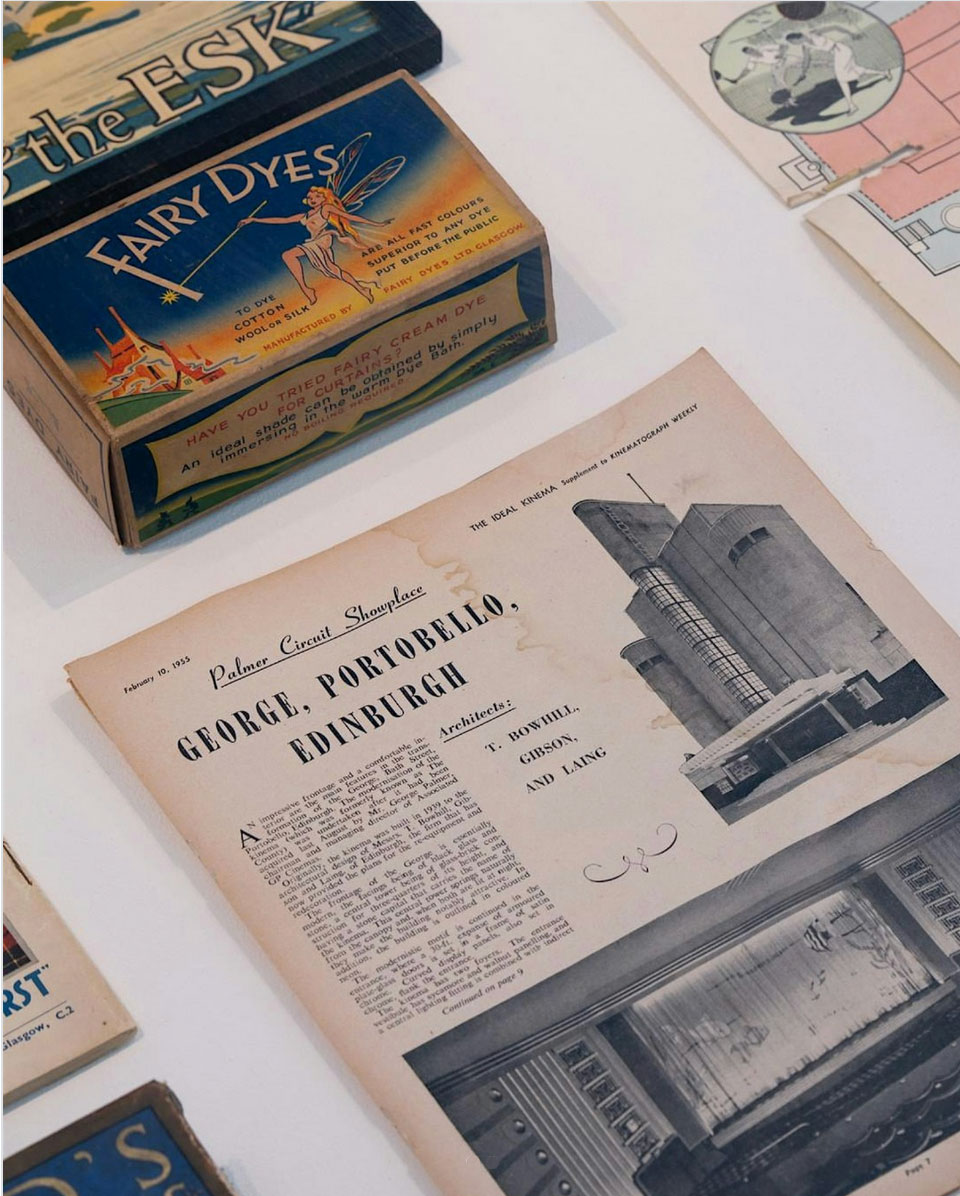
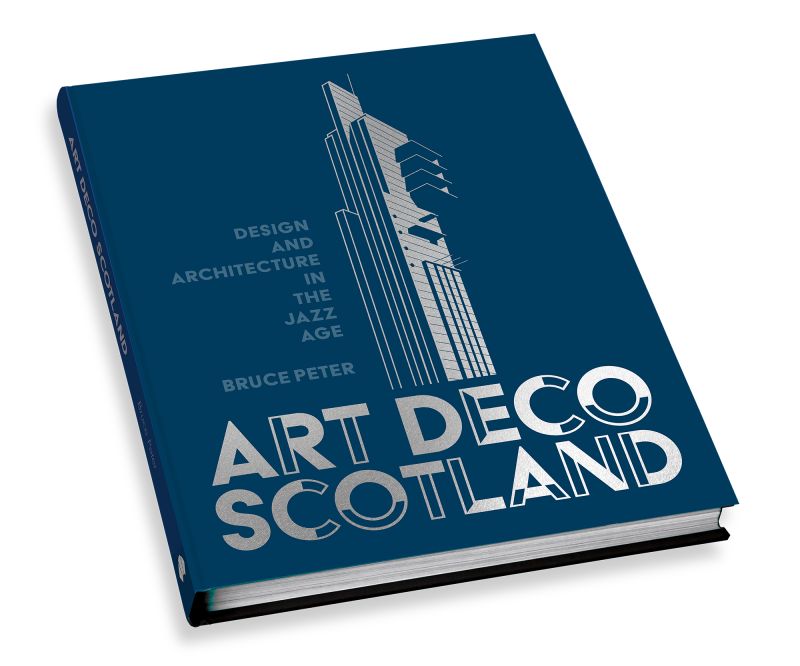
We’re delighted to be hosting Art Deco Scotland: Design and Architecture in the Jazz Age at our temporary home, the Bank of Ideas, 17 High Street, Rothesay until end August.
Join us on Friday 7 August at 2.00-3.00 pm for a fascinating and entertaining walk through through the exhibition with originator and publisher, Professor Bruce Peter, Head of Design Architecture at The Glasgow School of Art.
A celebration of design from the 1930s the exhibition explores how Art Deco shaped Scotland, from cinemas and cafés to transport, industry and ocean liners. It’s a vivid snapshot of a period defined by bold ideas, modernity and optimism. The Pavilion, built in 1938 in the International Modern style (a movement that ran parallel to, and often in conversation with, Art Deco) offers a fascinating counterpoint to the exhibition’s themes.
Developed the exhibition brings together images, archival material, film and research to trace how this influential style appeared across everyday life – from municipal buildings and retail spaces to entertainment and engineering.
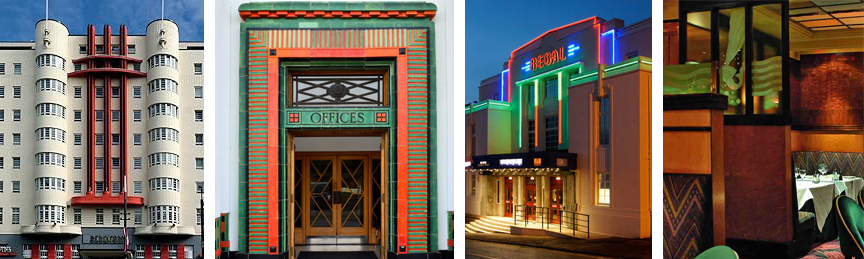
While rooted in history, the themes feel strikingly current. Art Deco emerged during a time of challenge and change, yet projected confidence, creativity and progress. Values that continue to resonate today.
Presented in the Pavilion Annex at the Bank of Ideas, the exhibition offers a timely connection to the Pavilion’s own story. As we look ahead to its reopening as a hub for creativity and community, this is a chance to reflect on the design heritage that shaped it – and importantly, the role it can play in the future.
Please join us for this free event.
Notes on the movements:
Art Deco is the glamour movement. It embraces ornament, symmetry, stylized natural forms, sunburst motifs, chevrons, expensive materials, gold and chrome finishes. It’s modernist in its love of speed and the machine age, but it deploys that love decoratively. Cinemas, ocean liners, department stores. It wants to dazzle you. Essentially modernism dressed for a party.
Bauhaus is the philosophy and the school (Dessau, 1919–1933). It’s the intellectual engine — the idea that art, craft and industrial production should be unified, that form follows function, that unnecessary ornament is dishonest. It’s as much about furniture, typography and textiles as buildings. When people say “Bauhaus architecture” they usually mean the building style the school itself embodied — flat roofs, white render, ribbon windows, industrial materials used frankly.
International Modern (also called International Style) is essentially Bauhaus ideas applied globally and systematically to architecture. It’s what happens when the Bauhaus philosophy scales up and travels — Gropius, Mies, Le Corbusier. Horizontal windows, pilotis, flat roofs, open plans, no ornament whatsoever. Pure function expressed as form.
The shorthand: Bauhaus is the idea, International Modern is the architectural expression of that idea, and Art Deco is the rival — same era, opposite instincts.
Rothesay Pavilion sits firmly in the International Modern camp. Clean, rational, seafront functionalism. No sunbursts in sight but filled with light and creative energy.
References:
- Twentieth Century Society — “International Style Modernism at its best with little if anything of its period to equal it in Scotland” https://c20society.org.uk/building-of-the-month/rothesay-pavilion-isle-of-bute
- Argyll and Bute Council — “Category A-listed building in the international Modernist style” https://www.argyll-bute.gov.uk/planning-and-building/growth-and-development/rothesay-pavilion
- Scottish Construction Now — “one of only two Pavilions remaining in the UK showcasing International Modernism architecture” https://www.scottishconstructionnow.com/articles/rothesay-pavilion-on-track-for-completion-in-2026
- VisitScotland — “a brilliant example of 1930s international modernism” https://www.visitscotland.com/info/see-do/rothesay-pavilion-p258961
- Robertson Construction / Argyll and Bute Council — “a fantastic example of international modernism” (Julie Tait) https://rothesaypavilion.co.uk/pav/news-and-blog/